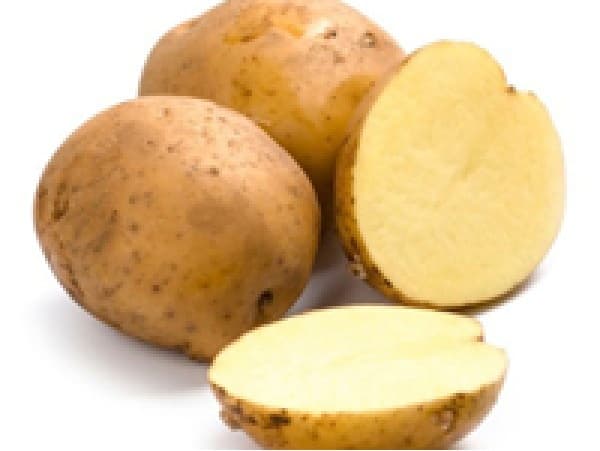
Yellow Potato – Da Lat (Solanum tuberosum L.) belongs to the Solanaceae family. This product is cultivated in Da Lat cool-climate areas of Lam Dong Province, Vietnam. Yellow potatoes are characterized by yellow to yellow skin and flesh ranging from pale yellow to deep yellow. Their firm texture makes them suitable for various cooking methods.
Characteristic Features
The tubers may be round, oval or elongated, with sizes depending on the variety and the supplier’s grading specifications. Acceptable potatoes should have a reasonably full shape and relatively uniform size within the same batch. The skin ranges from pale yellow to yellow-brown, is relatively dry and has natural eyes.
The flesh ranges from pale yellow to deep yellow, with a relatively uniform color and firm texture. There should be no abnormal dark spots or discoloration. The tubers should have intact surfaces, without deep cracks, severe bruising or excessive peeling.
Raw materials must be fresh, dry and firm, with no softness, decay, mold, abnormal odor or serious pest damage. Excessive sprouting and unusual green areas are not acceptable. Minor surface scratches may be tolerated if they do not affect usability.
Flavor & Texture
Yellow potatoes have a natural potato aroma and a mildly nutty, sometimes slightly sweet flavor. When cooked, the flesh becomes tender and may be smooth or floury depending on the variety and cooking method. Some varieties retain their shape well during boiling, steaming or stewing.
Uses and Applications
Suitable for boiling, steaming, frying, roasting, stir-frying, soups and stews, as well as preparation with meat, fish and other vegetables. The potatoes can be sliced, diced or cut into chunks according to preparation requirements. Before processing, inspect the potatoes, remove damaged tubers, wash thoroughly and peel as required.
Nutritionally, yellow potatoes provide carbohydrates, starch, dietary fiber, potassium and vitamins such as vitamin C and vitamin B6, along with naturally occurring plant compounds.